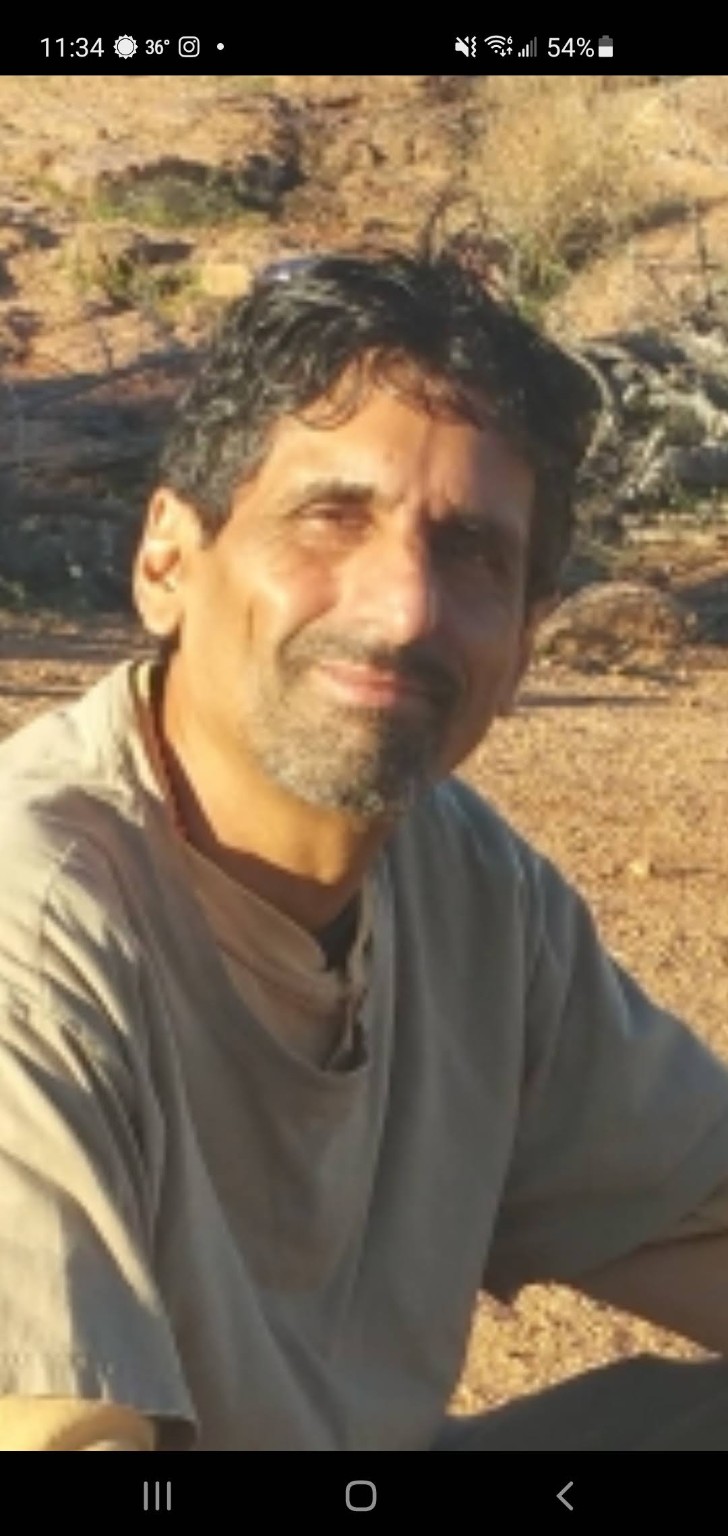
01 ROOTS AND BELONGING
A home that holds a story.
At eight, I sat at the feet of Prime Minister Indira Gandhi and was amazed by her presence. I began reading Mahatma Gandhi, Jawaharlal Nehru, and other leaders of India’s independence movement. Gandhiji inspired my dream of helping end poverty and hunger and creating a more peaceful world.
But my connection to India began before I had words for it. My mother was born in Kenya and my father came through Uganda, although both families came from Vaso, Gujarat, where they had lived a few houses apart. They never met there; their journeys finally brought them together in England.
I was born in London. At nine months, while my mother studied midwifery, I was sent to relatives in India until age four. India became connected within me to family, culture, and spirituality, but also to the early wound of leaving and returning.
I am the oldest of four children. I have kept our small family home in Vaso, the only home or land I own. My mother cared for its repairs, and I feel responsible for preserving it. That home holds ancestry, identity, memory, grief, and belonging.
My returns to India accompanied passages: scattering my grandmother’s ashes in the Ganges in 1969, then returning after my father’s passage in 2006 and my mother’s in 2022.
My attachment to Vaso gives me a small window into Kashmiris’ profound connection to home and ancestral land. When land is divided, threatened, or lost, the wound is deeply personal.
It is a window into another experience, not an equivalence. I approach Kashmir knowing that my own story cannot stand in for the lived experiences of Kashmiri people.
02 SERVICE AND SPIRITUAL PRACTICE
Learning to create space within.
My mother served for 50 years as a nurse and midwife. My father was a pujari—a Hindu priest and pandit—who performed marriages, pujas, and blessings. They taught me that service and healing have practical and spiritual dimensions.
From age eight, I sat at the feet of my Guruji, Shri Brahmananda Sarasvati—Dr. Ramamurti S. Mishra. Our sattvic, Yoga-Vedanta home taught me meditation, chanting, prayer, vegetarian living, and how to create space within myself.
Growing up Indian in Texas was isolating. As the first Indian student in my high school, I learned to move between cultures—a trailblazer before I knew the word. This led me to public policy and international relations at the LBJ School, then legislative and appropriations work at the Texas Capitol. My calling toward international peacebuilding remained.
Today, I live in Boulder with my Australian wife, Kahtia. Through thick and thin, she has helped me navigate this personal, cultural, spiritual, and political journey.
After my father passed, I studied mediation and discovered that I also needed to mediate the conflicting parts within myself. I had spent 30 years searching for healing. I am autistic, but did not know it for much of my life; I tried to “fix” myself without understanding my nervous system.
Meditation and mediation changed my question from “What is wrong with me?” to “What is happening within me, and can I meet it with awareness and compassion?” I learned that conflict cannot always be forced into resolution. We must create space for wounds, fears, experiences, and truths to be heard.
03 WHY WITNESSING
Being present without rushing to fix.
In 1976, at age 15, I volunteered for Jimmy Carter’s presidential campaign. His example as a global diplomat and negotiator inspired me. My mother admired him too and strongly supported my political activism. When Carter Peace Week fell on September 21—the anniversary of her passing—I chose to dedicate this work to her and her life of service.
From childhood, I watched the world’s suffering through ABC, CBS, and NBC, but did not know where inside myself to place it. As an adult, I saw the same cycles. Even while participating in peacebuilding communities, I kept searching for another way.
In 2023, I presented on virtual reality bringing human stories closer, including at the United Nations. Through the Pocket Project, I then found Global Social Witnessing: meeting suffering together with awareness, regulation, and compassionate presence, without turning away or becoming overwhelmed. In 2025 and 2026, I brought this practice into my Kashmir work.
Global Social Witnessing asks what happens inside us when we encounter suffering. Can we remain present, listen without immediately taking sides, and hear pain without interrupting or fixing? Can we hold multiple truths while affirming our shared humanity?
04 WHY KASHMIR
A place, a people, and many truths.
Kashmir carries South Asia’s unresolved wounds. Partition in 1947 brought violence, displacement, and death, while conflict engulfed Kashmir through 1948. Elders passed these stories to later generations through memories, silences, fears, and identities. The past is still present.
The 1947 Partition Archive’s 10,000 Memories work inspires me by preserving first-person histories and building a bridge toward understanding and healing. By witnessing grandparents’ stories before they are lost, we may help heal Partition’s intergenerational wounds and, through that wider healing, contribute to Kashmir.
Yet Kashmir is not simply a geopolitical problem to be analyzed or solved. It is a place of extraordinary people, culture, beauty, memory, grief, dignity, and hope. Since 2020, I have developed the Kashmir Initiative through Global Mediation Team, building relationships among academics, peacebuilders, healing practitioners, and diaspora communities.
The people I have met are part of this journey: Professor Samir Ahmed and Professor Al Fuertes through Carter School conversations on forgiveness and reconciliation, and Kosha Joubert and the Pocket Project community through collective healing.
Born in London and raised in the West, I approach this with privilege, resources, distance, and perspective—not to impose a solution, but to create conditions for deeper listening. Ela Gandhi reinforced something essential for me: Kashmiri people must participate meaningfully in imagining and shaping their own future. Their experiences, needs, and visions must remain at the center.
My hope is to create an opening through which Kashmiris, Indians, Pakistanis, and the global diaspora can see and hear one another differently. Our responsibility is to witness without turning away and make room for truth, dignity, grief, and dialogue.
I am grateful that Ela Gandhi has agreed to join an upcoming Carter Peace Week program. We hope to hear displaced Kashmiri Hindus and others affected by killings, fear, and the mass displacement of Kashmiri Pandits around 1989 and 1990. Their pain and hopes deserve to be witnessed with dignity.
Not peace as an abstract ideal.
Peace as a living practice of presence.
Peace as the courage to listen.
Peace as the willingness to create space for another person’s pain, dignity, truth, and hope.
This is why I am here.
And this is why I continue to answer its call.
Online reading edition of Raju’s “Why Kashmir Calls to Me,” Version 2, prepared as a 10-minute talk. Stage directions have been omitted for reading; the original talk PDF is available above.